
Making Manufacturers Superhuman: Why AIis Your New Best Teammate
Written by
 Jamie Hinton
CEO
Ready to harness the power of AI?
Discover how intelligent data solutions can transform your complex challenges.
The Quiet Crisis: The Silver Tsunami
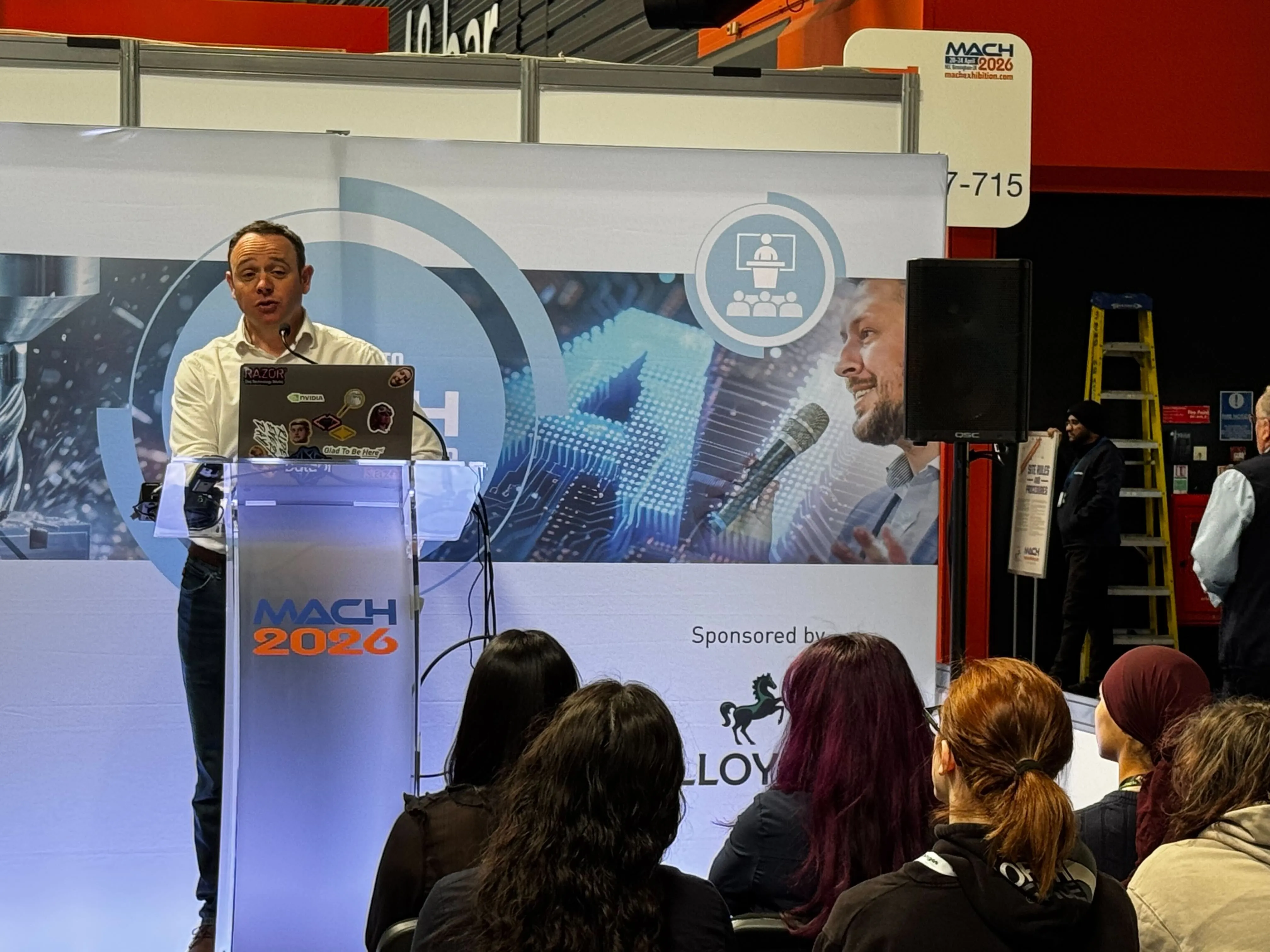
During our recent keynote at the MACH exhibition, we shared a pivotal message: we are standing at the edge of a new industrial era. But the story of this era won't be written by machines. It will be written by people. Today, we aren't talking about replacing human workers. We are talking about making them superhuman. We are talking about building a teammate, not just buying a tool.
Right now, 1 in 3 manufacturing workers in the UK is over the age of 50. Look around your factory - we are talking about a third of the floor. The expert machinists, the master welders. A third of them are heading for the exit. If we do not find a way to digitise their expertise today, tomorrow we won't have an advanced factory. We will just have a highly automated, incredibly expensive museum.
This demographic shift is what we call a Silver Tsunami. To dive deeper into how this is reshaping the industry, read our in-depth white paper: The Silver Tsunami: Fighting the Tide.
When a generation of experience begins to leave the workforce in droves, their knowledge goes with them out the door. The next generation entering the workforce are digital natives. They are hungry, they are tech-fluent. They know how to operate the new digital interface, they can program a robotic arm. But they are inheriting an analogue world. They are missing one vital ingredient: experience.
The Blueprint That Lied
You might think that you are safe because you have everything documented - you have manuals, you have specs, you have blueprints. NASA thought the exact same thing. In the 2010s when NASA was looking to recreate the legendary Apollo F1 rocket engine, they struggled immensely. The blueprint captured the thickness of a steel plate and the chemical composition of the fuel, but not the how and why.
What they found was that the original 1960s engines weren't just built to spec; they were hand-crafted. The blueprint didn't capture that when a master welder brazed a specific joint, he had to hold the torch at a slightly different angle for an extra 2 seconds to prevent a microscopic fracture. The blueprint didn't explain that an engineer tuned the fuel injectors by listening to the acoustic frequency of the engines. They had the specs, but they were useless without the people who created them.
Every single one of you has that F1 rocket welder on your floor right now. You have the veteran operator who can fix a temperamental machine just by listening to it, and the shift manager who knows how the ambient humidity affects material tolerance.
The Two-Terabyte Blind Spot
We have more technology than at any point in human history. We have cloud computing, sophisticated sensors, and machine learning algorithms. Yet, the average factory floor is generating two terabytes of data every single day.
This data isn't in parts shipped or revenue generated; it's in sheer noise. It's every sensor, every PLC, every shift log, and every automated alert screaming at your operators at the exact same time. This towering mountain of data is almost useless at solving the demographic crisis because it is entirely blind to the human context. The data gives you temperatures and RPMs, but it misses the intent. It doesn't tell you why the veteran machine operator looked at the machine, listened to the spindle, frowned, and made a manual change. The PLCs captured the change, but not why. And this is where custom Agentic AI can help.
Avoiding the Three Traps of Digital Transformation
Historically, we have fallen into 3 main traps when it comes to digital technologies:
The Robot Overlord
This is the top-down authoritarian implementation of technology where the C-suite drops an expensive system onto the factory floor and tells workers to just do what the screen says. The workforce immediately rebels. This is definitely not technology being a teammate.
The Five-Year Mega IT Project
This project requires 80 steering committees, external consultants, and a complete rip and replace. AI moves way too fast, and by the time the project is finished, the underlying model is 3 generations obsolete.
The Magic Plaster
This involves buying a generic AI tool off the shelf and slapping it onto a deeply broken, undocumented process. Starting superficial is fatal. AI cannot fix a fundamentally broken process; it will only optimise a broken process to fail faster.
Outcomes First: Digitising the Instinct
Technology is sprinting but human adaptation is a crawl. AI is not our master, it is just the latest iteration of technology. You do not start by buying ChatGPT or with algorithms; you start with a pain point.
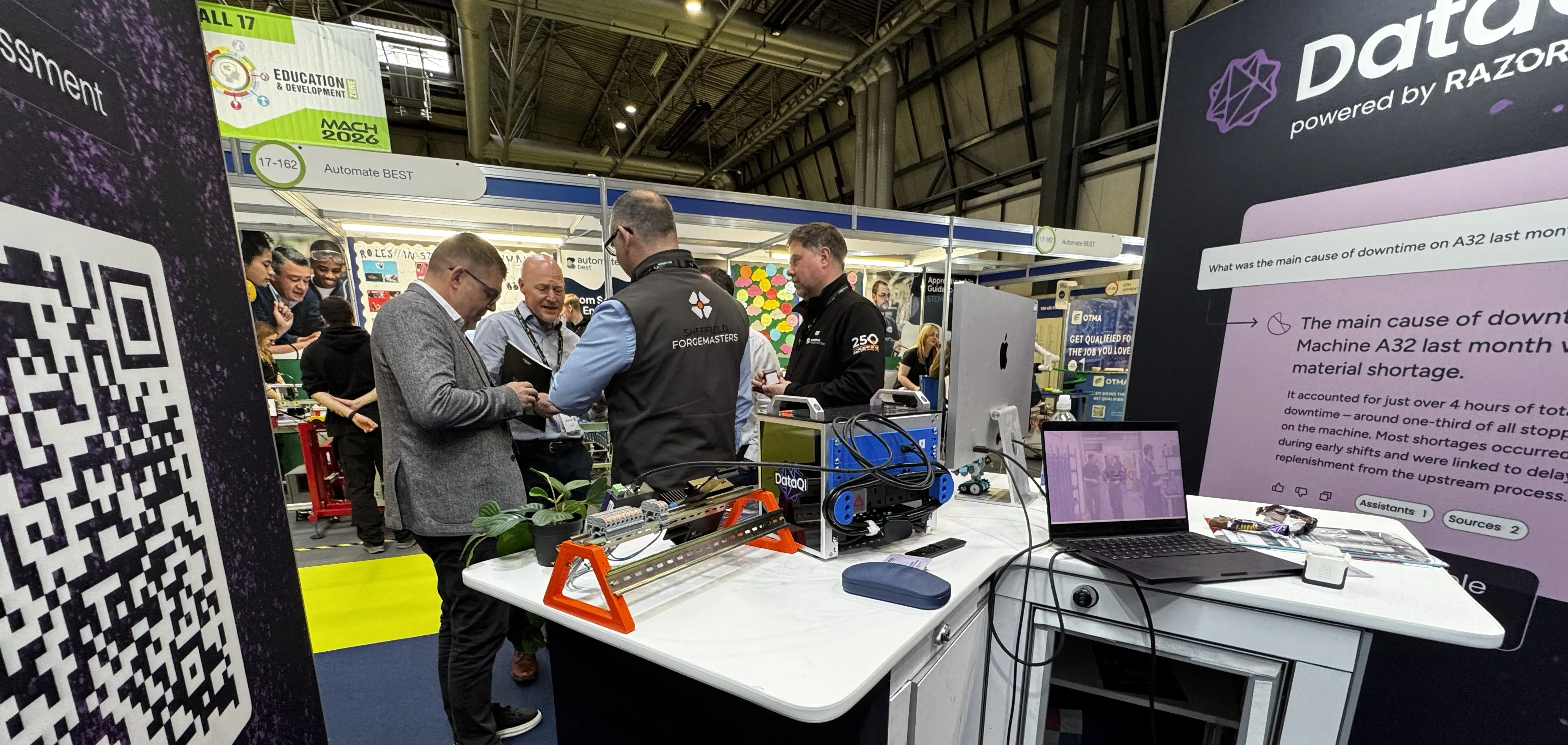
You can't manage what you can't measure. To do this right, we capture every machine and process, going deep into PLC integration and connecting to legacy machines. We use computer vision to measure manual tasks. We created DataQI Insights for the factory floor and DataQI Agent to orchestrate and be the brain.
Once we have the factory monitored end to end, we tackle the hardest part - capturing the tacit knowledge. You can't just simply feed in your standard operating procedures. We capture the knowledge when someone is "in state". We use AI to have a conversation to uncover the why, understanding the context to delve deeper.
The Industrial Mind: Private and Secure
Isn't all my proprietary, highly sensitive information being shared with the AI giants? That's a great question. We are building manufacturing-specific Small Language Models and specialised AI Agents that understand the context of a factory floor. They connect to your existing infrastructure securely and run on modest hardware right inside your own infrastructure. It is your own private industrial mind, without the dependency on a third party.
The Teammate in Action
What does this look like in the real world? Take an example of a UK manufacturer we are working with. We found a 6% availability increase in less than 9 months, meaning millions on the bottom line.
This wasn't a silver bullet, but hundreds of moments. An operator was running a bank of machines, and one threw up an obscure error code. Normally, this machine sits not producing while waiting for maintenance. But with DataQI deeply integrated, it read the custom code, interpreted the context, and sent a simple instruction directly to the operator: 'The guard door is a millimeter out of alignment. Nudge it shut.' The machine was running again. The operator had a teammate - we made them superhuman.
The Superhuman Blueprint
We have talked about capturing tacit knowledge, but you cannot fix what you haven't measured. You need to know exactly where your company stands today. It is the first step in the superhuman blueprint.
It's time to stop treating AI as an intimidating tool, and start welcoming it as your most powerful teammate. To uncover your baseline and take the first step, complete our Manufacturing AI Readiness Assessment.
Ready to digitise your expertise and start building your own industrial mind? Explore our AI Activation service to turn your factory's noise into actionable intelligence.
More from our team
Keep Reading

The Era of Agentic Token Economics
Learn how engineering teams control agentic AI token costs with smaller models, efficient context management and production-focused architecture.

What Every CEO Needs to Know About AI
Move beyond the hype of Generative AI to the reality of Agentic AI. This guide helps CEOs understand the shift from 'chat' to 'act' and how to leverage.
The Connected Organisation - Insight Beyond the Shop Floor
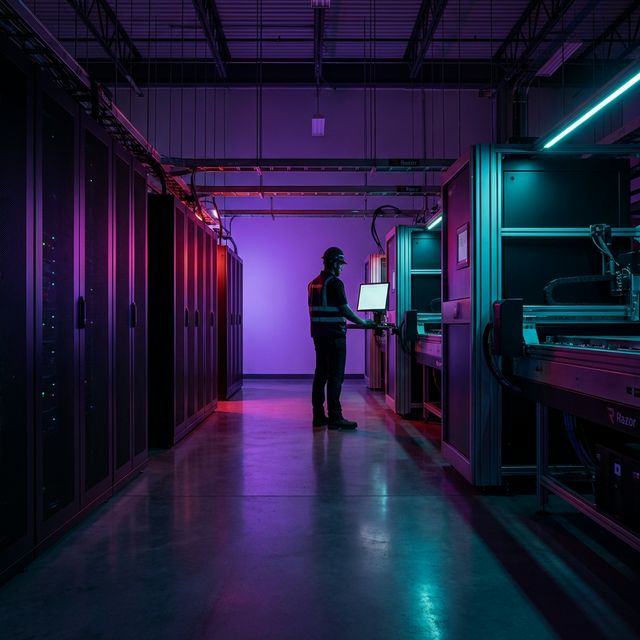
Discover how to bridge the gap between the shop floor and the boardroom. Learn how Agentic AI transforms disconnected manufacturing data into a unified.
Diving deeper into Razor
Your Next Move

AI Activation & Proof of Value
Stop guessing where AI will help. Razor's AI Activation engagement helps you identify high-value use cases, map data readiness, and build working Proofs of Value.

Products
Know what your business knows, and put it to work. Sovereign, cost-controlled and grounded AI with DataQI Assistant and Agent.
Artificial Intelligence
Explore Razor's practical artificial intelligence services for automating operations, improving decisions and delivering secure enterprise AI solutions.