

Leveraging Your Data:A Practical Guide
Written by
With contributions from


Tom Helliwell
Based on a discussion with Patrick Murray, Jamie Hinton and Tom Helliwell.
Ready to harness the power of AI?
Discover how intelligent data solutions can transform your complex challenges.
Every business is a data business
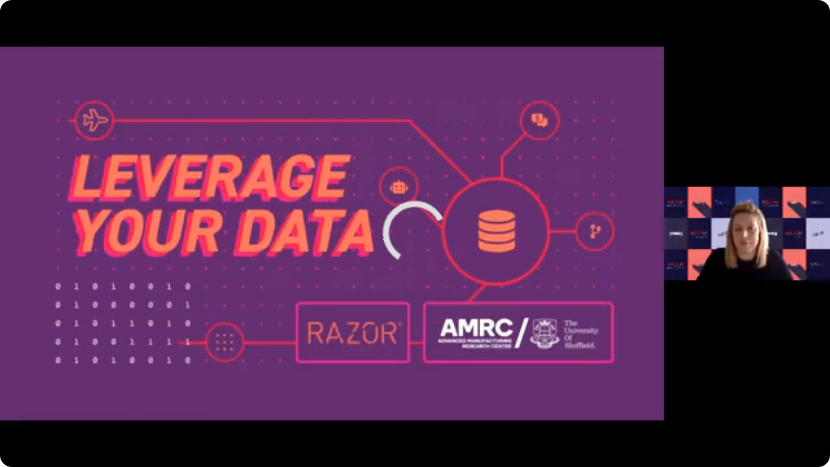
When you're implementing data and AI strategies, the focus must be right from the start. We hosted a deeper dive into making data work for you, featuring Patrick Murray, Jamie Hinton, and Tom Helliwell discussing the reality of deriving value from information.
Watch the video, or read on for their insights.
As Patrick Murray (VP of Product) highlights, data flows through every single operation, whether you're actively collecting it or neglecting it. Data analytics and AI have moved beyond early adopters to become a genuine competitive advantage. But starting large is often the wrong approach. It's far more effective to find that one small signal that you can convert into a clear, actionable insight.
Aim for the bullseye with your data strategy
The ultimate goal for any data transformation should be advancing through the DIKW pyramid: shifting from Data to Information, to Knowledge, and finally to Wisdom. It's this wisdom that enables confident, decisive actions.
Organisations frequently fail because they try to build a massive foundational data layer without understanding their true commercial objectives. By failing to define the problem early on, they lose momentum and fall into what Patrick describes as the 'trough of disillusionment'. Instead, frame the problems as hard questions right at the start, ensuring you identify what tangible business value your data project is meant to deliver before you begin the deep engineering. Frame your early conversations around value: what problem are you solving?
Innovate or get left behind
Jamie Hinton drives this forward by reminding us of the sheer velocity of change. If you look back just ten or fifteen years, the technological landscape was completely different. The enterprise that refuses to innovate will undeniably age and decline rapidly.
The path to progress often involves rapid sprints. Jamie shared an example of modernising a complicated legacy purchase order system through iterative improvements in computer vision and machine learning. By delivering these highly focused tracer-bullet solutions, companies can confidently discover what works without a massive upfront investment. And crucially, a business must retain empathy for its people throughout these tech overhauls-if you ignore the internal team context, digital transformation fails.
Visibility is your first step
Data expert Tom Helliwell closed out the conversation by highlighting that success in modern manufacturing requires effectively managing complexity. Consolidating business silos into streamlined visualisations-such as through PowerBI and robust Data Warehouses-allows individual departments to self-serve in a highly productive way.
Even complex real-time operational data tracking can be spun up quickly. Equipping floor-level staff and management with immediate visualisations unlocks the ability to spot resource bottlenecks instantly. Don't underestimate what your organisation can begin achieving with a few well-executed tracking metrics. Start small to answer your big questions.
More from our team
Keep Reading
Making Manufacturers Superhuman: Why AI is Your New Best Teammate
Explore Making Manufacturers Superhuman: Why AI is Your New Best. Read practical guidance and perspectives from Razor’s technology specialists.

The Era of Agentic Token Economics
Learn how engineering teams control agentic AI token costs with smaller models, efficient context management and production-focused architecture.

The Connected Organisation - Insight Beyond the Shop Floor
Discover how to bridge the gap between the shop floor and the boardroom. Learn how Agentic AI transforms disconnected manufacturing data into a unified.
Diving deeper into Razor
Your Next Move
Artificial Intelligence
Explore Razor's practical artificial intelligence services for automating operations, improving decisions and delivering secure enterprise AI solutions.

AI Activation & Proof of Value
Stop guessing where AI will help. Razor's AI Activation engagement helps you identify high-value use cases, map data readiness, and build working Proofs of Value.

Workflow Automation Services
Reduce manual work by automating repetitive tasks and connecting existing systems. Combine AI, software engineering, and systems integration with Razor.